Reducing Aerospace Part Cycle Times with 5 axis laser Cutting
Key Takeaways
- Practical Uses of 5 Axis Laser Cutting
- Addressing Obstacles in Time Efficiency
- Evaluating the Effects of Time Efficiency
- Importance of Expertise in Efficient 5 Axis Cutting
Real-World Applications of 5 Axis Laser Cutting
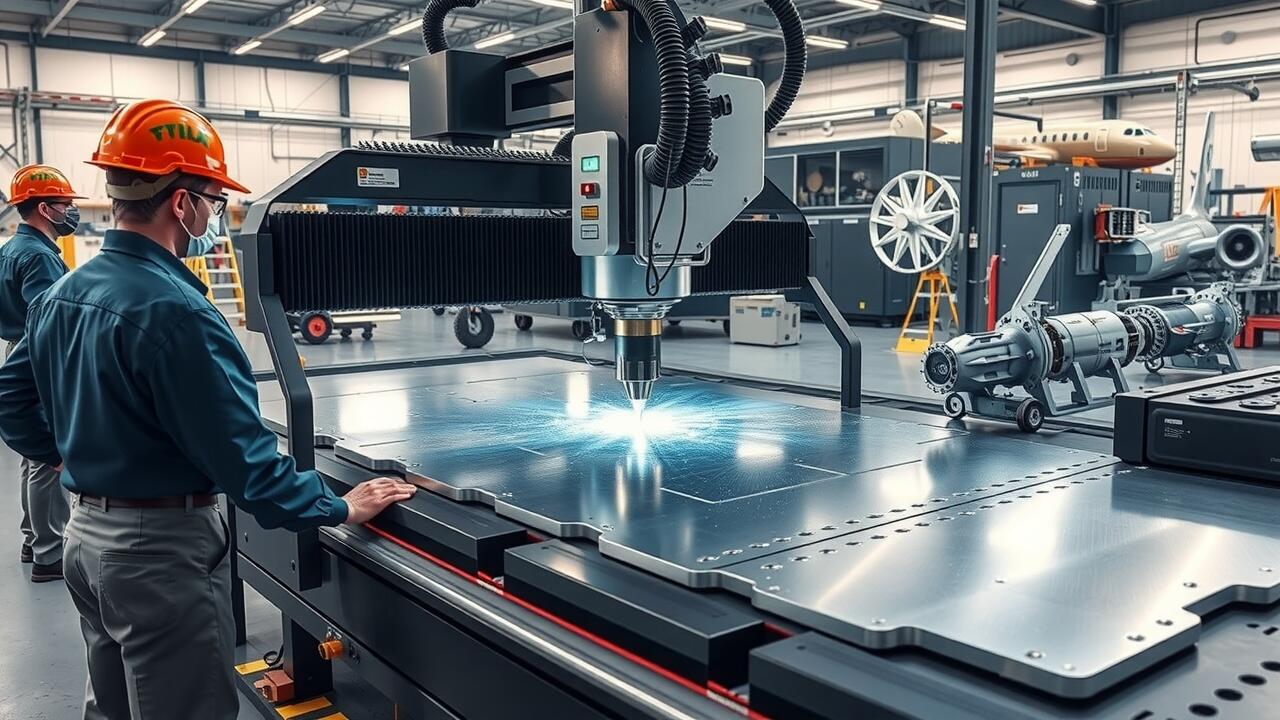
5 axis laser cutting technology is becoming integral to modern aerospace manufacturing, offering efficiency and precision that traditional methods cannot match. One notable application includes the creation of complex airframe components, where the technology facilitates intricate shapes and detailed engravings while maintaining tolerances as tight as ±0.005 inches. Additionally, the method allows for rapid prototyping and streamlined production, enabling manufacturers to reduce their turnaround times significantly. For aerospace companies operating under tight schedules and budget constraints, these advantages translate into substantial cost savings and improved responsiveness to market demands.
Another real-world application is found in the fabrication of turbine blades, which require high precision and surface integrity. The utilization of 5 axis laser cutting ensures that even the most complex geometries can be achieved without compromising the material properties. Companies that utilize these advanced 5 axis laser cutting services witness an increase in production volume, with reports indicating cycle time reductions of up to 30%. These benefits not only enhance product quality but also contribute to meeting aviation safety standards stipulated by regulatory bodies such as the FAA and EASA. Incorporating 5 axis laser technology allows aerospace manufacturers to stay competitive while adhering to rigorous performance benchmarks.
What are the Most Common Aerospace Parts Made Using This Technology?
5 axis laser cutting technology has become instrumental in the aeronautics sector, enabling the creation of complex and precise components. Common aerospace parts made using this technology include structural components, engine parts, and brackets. For instance, manufacturers often utilize 5 axis laser cutting for intricate wing components that require tight tolerances and lightweight designs. The versatility and accuracy of this method allow for reduced material waste, critical in an industry that prioritizes efficiency and sustainability.
Another significant application of this technology is in fabricating components for advanced propulsion systems. The precision of 5 axis laser cutting reduces the inherent geometrical limitations faced with traditional machining methods. Aerospace engineers depend on this cutting technique to manufacture components like turbine blades and housings. These parts benefit from the superior edge quality and enhanced strength characteristics, which result from tailored thermal processing during production. To widen access to this technology, companies frequently search for 5 axis laser cutting services near me, ensuring they can meet evolving regulatory demands and maintain competitive production timelines.
Overcoming Challenges in Cycle Time Reduction
The integration of 5 axis laser cutting technology into the aerospace sector provides substantial benefits, yet several challenges hinder optimal cycle time reduction. One pressing issue is the technological limitations inherent in the machinery. Manufacturers often struggle with the intricate software requirements needed to operate advanced 5 axis laser systems, leading to extended training periods and potential production delays. A case in point is a recent pilot program that revealed a 30% increase in cycle time due to operator inefficiencies stemming from inadequate training.
Additionally, supply chain vulnerabilities frequently affect the availability of critical components necessary for laser cutting operations. For instance, shortages in high-quality laser optics can result in extended downtimes. Businesses seeking to leverage 5 axis laser cutting services near me must focus on establishing robust supplier relationships and integrating predictive maintenance strategies to mitigate these risks. Investing in automation, alongside a skilled workforce, can further streamline operations and reduce cycle times while enhancing product precision and quality.
What Solutions Exist for Addressing Technological Limitations?
Technological limitations in 5 axis laser cutting often stem from the complexity of the systems involved and the precision required for aerospace applications. Upgrading software and hardware components can alleviate some of these issues. For instance, implementing advanced motion control algorithms enhances cutting speed and accuracy. Companies that embrace automation, such as those utilizing robotic arms in conjunction with 5 axis laser cutting, frequently report improved cycle times. A case study from a leading aerospace manufacturer revealed a 30% reduction in operational downtime after upgrading their systems to include real-time monitoring capabilities.
Training operators and technicians is another essential aspect of overcoming these limitations. Skilled labor plays a crucial role in maximizing the efficiency of 5 axis laser cutting processes. Programs tailored to enhance technical competencies can significantly improve not only productivity but also safety and quality compliance. Regular workshops that focus on the latest advancements in 5 axis laser technologies can ensure that teams remain proficient. Furthermore, accessing “5 axis laser cutting services near me” can provide additional resources and expertise, allowing organizations to benchmark their operations against industry standards and implement best practices effectively.
- Invest in upgrading both hardware and software components for better system performance.
- Implement advanced motion control algorithms to enhance cutting precision and speed.
- Explore automation options by integrating robotic arms into the cutting process.
- Focus on comprehensive training programs for operators and technicians to boost skill levels.
- Provide regular workshops on the latest developments in 5 axis laser technology.
- Utilize local 5 axis laser cutting services for access to expertise and best practices.
- Establish a system for real-time monitoring to reduce operational downtime.
Measuring the Impact of Cycle Time Reduction
Determining the impact of cycle time reduction in aerospace manufacturing requires precise metrics. Effective measurement incorporates several key performance indicators (KPIs), such as lead time, production costs, and resource utilization rates. For instance, a study conducted by a leading aerospace firm demonstrated that transitioning to 5 axis laser cutting technology decreased lead times by 40%, significantly enhancing their throughput. After implementing these changes, the company also reported a 25% reduction in material waste, underscoring the efficiency of advanced cutting solutions.
Organizations that utilize 5 axis laser cutting should focus on continuous improvement based on these KPIs. Regularly analyzing cycle time data helps identify bottlenecks and areas for optimization. An example of this can be seen in a major aerospace manufacturer that adopted real-time monitoring tools, enabling them to track production efficiency immediately. Over six months, they adjusted their processes, resulting in a 30% improvement in operational efficiency. Using such analytics-driven approaches fosters a culture of data-informed decision-making, empowering companies to respond effectively to market demands.
How Can Key Performance Indicators (KPIs) Guide Improvements?
Key Performance Indicators (KPIs) provide measurable insights that directly influence operational efficiency in aerospace manufacturing. By focusing on metrics such as cycle time, scrap rate, and on-time delivery, organizations can identify bottlenecks in the 5 axis laser cutting process. For example, a leading aerospace company implemented a KPI-driven strategy that resulted in a 25% reduction in cycle time over six months. This was achieved by meticulously analyzing downtime and rework instances, which led to targeted training for operators and adjustments in workflow.
In addition, tracking KPIs enables teams to benchmark performance against industry standards. An aerospace manufacturer utilizing 5 axis laser cutting services near me could monitor its throughput in comparison to similar companies in the sector. This benchmarking might reveal opportunities for improvement in specific areas such as setup times and tool wear, driving actionable changes that enhance overall productivity. Regular reviews of these KPIs allow firms to adapt their strategies swiftly, ensuring they remain competitive and responsive to evolving market demands.
The Role of Skilled Labor in Effective 5 Axis Cutting
The proficiency of skilled labor in 5 axis laser cutting is critical to ensuring precision and efficiency. Aerospace components, such as turbine blades and structural frames, often require intricate designs and tight tolerances. For instance, a well-trained technician can operate a 5 axis laser system to achieve tolerances as tight as +/- 0.005 inches, essential for components exposed to extreme conditions and high stress. They leverage their expertise to determine optimal settings for material types, thicknesses, and geometric complexities, minimizing waste and maximizing throughput.
The aerospace industry increasingly relies on advanced training programs and certifications to elevate worker skill sets in operating sophisticated laser cutting technologies. For example, many organizations are adopting Six Sigma methodologies to refine their processes and enhance operational efficiency. Implementing these best practices not only drives down production costs but also contributes to shorter delivery times, thereby attracting more companies to seek 5 axis laser cutting services near me. Well-trained workers play a pivotal role in maintaining safety standards, ensuring regulatory compliance, and upholding the high quality standards expected in aerospace manufacturing.
FAQS
What is 5 Axis laser cutting?
5 Axis laser cutting is a manufacturing process that utilizes a laser to cut materials with high precision in multiple directions. This technology allows for complex geometries and shapes to be accurately produced, making it particularly valuable in aerospace applications.
How does 5 Axis laser cutting reduce cycle times for aerospace parts?
5 Axis laser cutting reduces cycle times by allowing for more efficient and precise cuts in a single setup, minimizing the need for multiple machine setups and reducing the overall production time for complex aerospace components.
What are some common aerospace parts that can be manufactured using 5 Axis laser cutting?
Common aerospace parts made using 5 Axis laser cutting include brackets, fuselage components, engine parts, and structural components, all of which require high precision and intricate designs.
What challenges are associated with reducing cycle times in aerospace part manufacturing?
Challenges include technological limitations of existing machinery, workforce skills, material properties, and the complexity of designs that may require multiple machining processes, each of which can contribute to longer production times.
How can Key Performance Indicators (KPIs) help in measuring the impact of cycle time reduction?
KPIs can provide quantifiable metrics to assess production efficiency, quality, and cost-effectiveness. By tracking these indicators, manufacturers can identify areas for improvement and make informed decisions to streamline processes further.
What role does skilled labor play in the effectiveness of 5 Axis laser cutting?
Skilled labor is crucial in operating advanced 5 Axis laser cutting machines, as it requires specialized knowledge to program and troubleshoot the equipment, ensuring optimal performance and quality in the manufacturing process.